
The weekend’s military escalation involving Iran has increased tension across parts of the Middle East. For freight markets, it is important to separate what directly affects container shipping from what influences costs more indirectly.
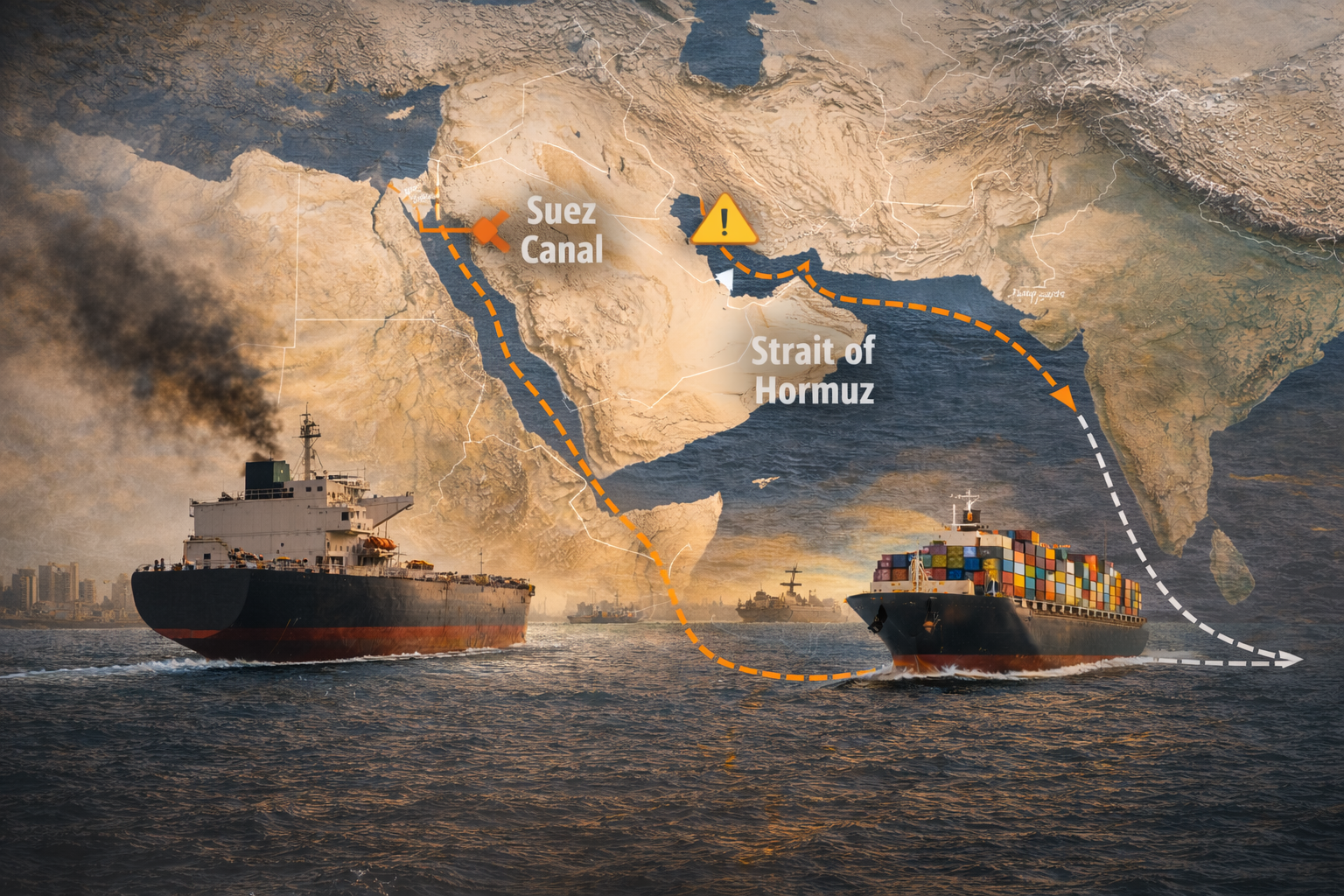
One area attracting attention is the Strait of Hormuz, the narrow waterway at the entrance to the Persian Gulf through which a significant proportion of the world’s oil exports move. While this corridor is critical for global energy supply, it is not a core routing lane for most container services moving between Asia, the Middle East and Europe. Many deep sea services operate via the Malacca Strait and the Suez Canal.
Instability in the Gulf has already influenced oil markets. That is where the freight implications begin, as volatility in crude prices feeds directly into marine fuel costs and ultimately, freight pricing.
Security concerns in the wider region, particularly around the Red Sea and Bab el-Mandeb, continue to influence carrier routing decisions. Some services have adjusted schedules or considered longer diversions around the Cape of Good Hope, depending on risk assessments.
Reports confirm damage to several oil tankers in the Gulf area, and maritime security warnings have reduced traffic through key energy corridors. While this does not directly block global container trade, it contributes to wider market volatility.
What This Means for UK Container Imports
Longer Transit Times
Where vessels avoid the Suez/Red Sea corridor and reroute via the Cape of Good Hope, transit times into the UK extend. Longer voyage times effectively reduce available global capacity and can impact schedule reliability across multiple trade lanes.
Freight Rate Pressure
Extended sailings, higher operating costs and reduced equipment repositioning efficiency are placing upward pressure on container freight rates.
Fuel Cost Transmission
Tension around the Strait of Hormuz has increased oil market volatility. Even without a physical supply disruption, crude price movement feeds directly into marine bunker pricing. Fuel is one of the largest operating costs for container lines, so sustained increases typically translate into bunker adjustment factors and general rate pressure.
Scheduling Disruption
Network adjustments, service consolidations and vessel rescheduling can create rolling delays and congestion at major transshipment hubs.
Insurance & Risk Premiums
War-risk premiums and additional marine insurance costs remain elevated for vessels operating in higher risk waters. These costs are reflected within overall freight pricing structures.
What Westbound Is Monitoring
• Carrier service updates and routing announcements
• Red Sea and Suez security advisories
• Oil price movements and bunker cost trends
• Schedule reliability at key UK ports such as Felixstowe, London Gateway and Southampton
If regional tension continues:
• Transit times may remain extended
• Freight rates are likely to stay firm or move upward
• Landed costs into the UK will reflect higher fuel and insurance inputs
As always, we will continue to review routing stability and rate movements and keep customers updated accordingly.
If you have any questions regarding the above, Westbound is here to help.
At Westbound Logistics we pride ourselves in offering personalised and tailored logistics solutions. To find out more please call 01375 800800 or email [email protected].