
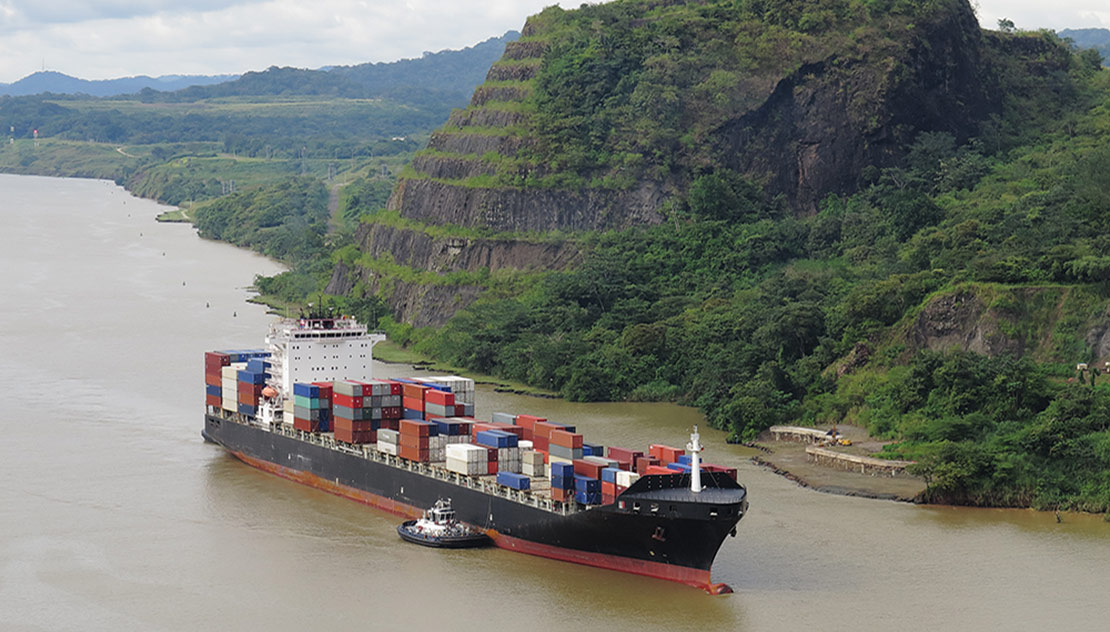
The outlook for the world’s two largest shipping canals is currently heading in different directions, as the Panama Canal heads back to normal and volumes drop from Suez.
The Panama Canal has been suffering from severe delays and congestion for over a year, due to severe drought restricting the maximum number of daily vessel passages. However, the good news is that from the middle of next month the waterway will be returning to almost full operational levels.
The Panama Canal Authority recently announced that from 22nd July the daily transits will be rising to 34, which is very near to the average of 34-38 vessels under usual conditions and a long way above the 20 vessel transits that were being allowed during the height of the crisis.
At one point during the drought, ship owners were entering auctions to jump the queues at the entrances to the canal, paying up to $1 million. The canal is considered essential to global trade and is the continent’s only crossing point for container ships between the Atlantic and Pacific oceans.
However, while Panama heads back to normal, the Suez Canal is being financially impacted by the rerouting of container ships away from the Red Sea area, and there seems little indication that things are going to change short term.
Since Houthi attacks on cargo ships forced carriers to use the Cape Of Good Hope route, the Suez has seen volumes fall significantly. Only 44 million tonnes passed through the canal in May, a drop of over 68% on the 142 million tonnes that transited in May 2023.
Therefore, the Egyptian state-owned canal’s revenue fell to $337 million last month, a drop of over 64% compared to the $648 million recorded in the same month last year.
If you have any questions regarding the above, then Westbound are here to help. So, please do not hesitate to contact us.
Become a Westbound VIP
From simpler bookings, communication, and collaboration to reporting, insights, and more, our intuitive cloud platform puts everything in one place. So you get control, efficiency, and transparency, and a launchpad for your supply chain.
Related Posts