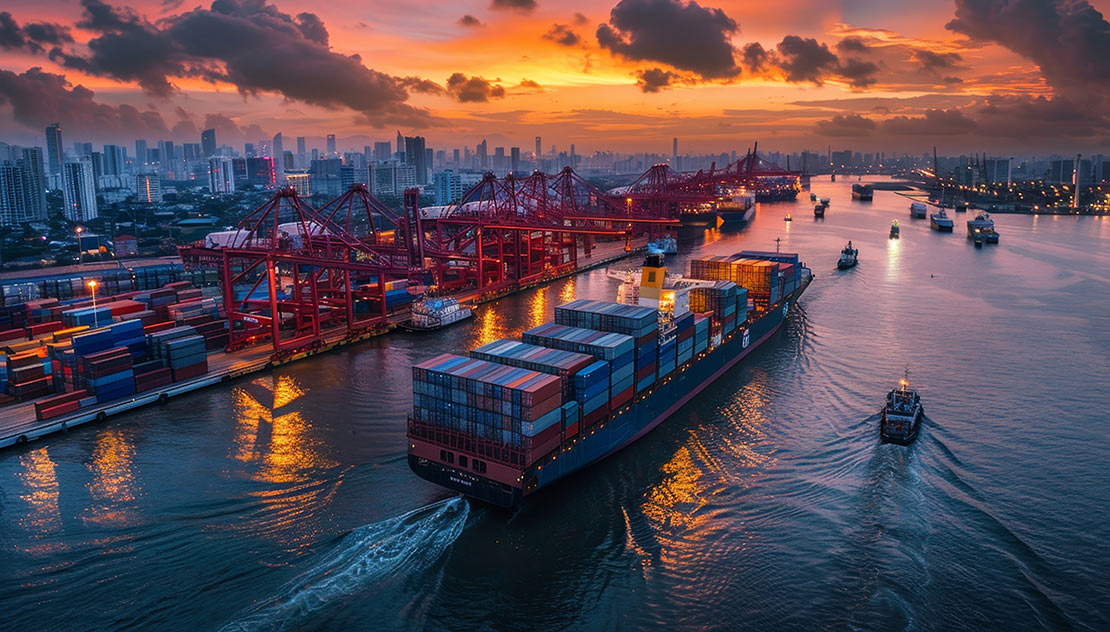

Port congestion remains one of the most persistent challenges facing global supply chain operations as we head towards 2026.

Despite some reductions in waiting times in recent weeks – likely due to lower demand rather than newfound efficiency – the broader picture remains one of disruption. This year has seen record levels of vessel queues at many ports, and next year could be the same – particularly if carriers shift back to the Suez Canal route.

Several of the world’s busiest hubs have been severely affected. Shanghai, Ningbo, Singapore, Los Angeles/Long Beach, Antwerp, and Rotterdam have been amongst the worst affected ports, though the impact is far from limited to these locations.

In the UK, the ocean freight ports of Felixstowe, London Gateway, and Southampton have also struggled with congestion.

Weather-related disruptions and industrial disputes have further slowed operations across multiple regions, with labour unrest playing a notable role in intensifying delays.

Recent strike actions in Rotterdam, Portugal, and Mexico have hindered port productivity, and the ongoing national strike in Belgium threatens to deepen issues at Antwerp.

Looking ahead, although it is unclear if or when carriers will be ditching the current Cape Of Good Hope diversions, the potential mass return to Suez Canal routings could have the biggest impact on congestion next year.

A move back to the traditional route would shorten transit times and could also compress vessel arrivals. Ships that are currently more evenly spaced via longer detours would likely begin to cluster, placing even greater pressure on already strained European and Asian terminals.

As a result, congestion may remain a defining challenge well into next year, and the team at Westbound will be monitoring developments closely.

If you have any questions regarding the above, then Westbound are here to help. So, please do not hesitate to contact us.