
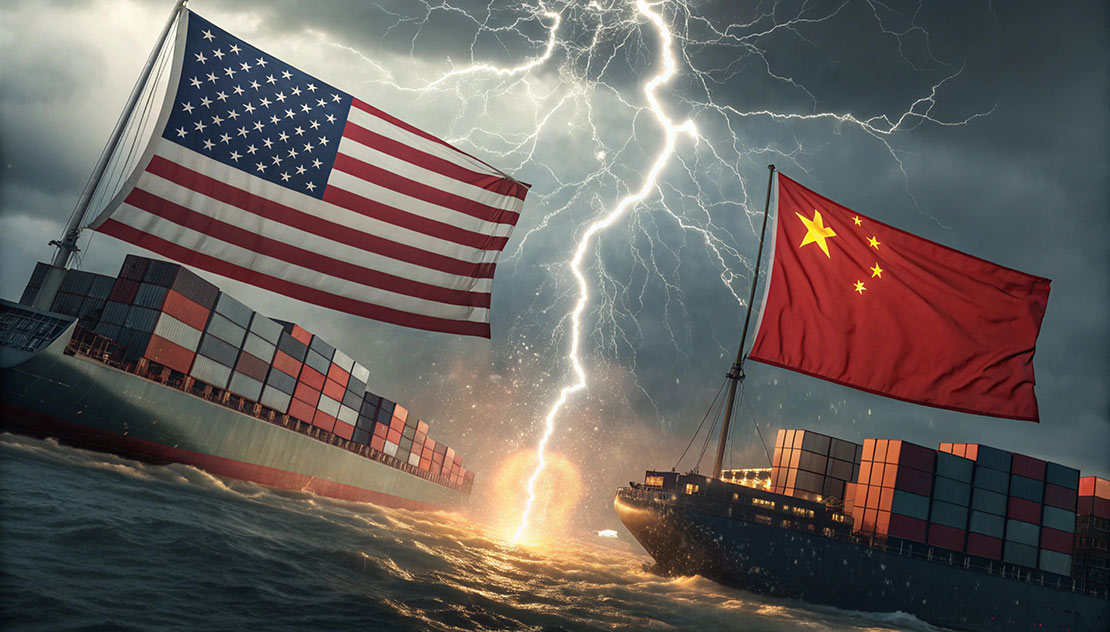
Beijing has introduced reciprocal port fees for American vessels entering Chinese ports, mirroring recent measures imposed by the US Trade Representative (USTR) on Chinese ships and shipowners.
Both policies came into effect on October 14th, though the short notice of China’s decision has already disrupted carriers. Maersk Line confirmed it has diverted two of its US-flagged vessels, originally scheduled to call at Ningbo, due to the newly imposed charges.
The two ships, operating on Maersk’s transpacific TP7 service, will now discharge their Ningbo-bound cargo in Busan, South Korea, to avoid the penalties. We understand a decision has not yet been made regarding the remaining vessels on this service, which also operate under the US flag.
Under the new Chinese regulation, port fees will now apply to vessels that are US-built or US-flagged, as well as those owned or operated by US entities or individuals holding at least a 25% ownership stake.
The fee structure closely mirrors that of the USTR, starting at RMB 400 (approximately £42) per net tonne, and set to increase annually to RMB 1,120 (£120) by 2028. However, ships calling at multiple Chinese ports during the same voyage will only be charged at their first port of entry, and each vessel will face a maximum of five charges per calendar year.
This development comes just weeks before the current tariff truce between Washington and Beijing is set to expire. Trade tensions have escalated in recent months following China’s tighter controls on rare earth exports and President Trump’s threat to impose an additional 100% tariff on Chinese goods.
Despite these rising frictions, Presidents Trump and Xi Jinping are expected to meet later this month in South Korea, a discussion many hope will lead to a de-escalation of the ongoing trade dispute.
Westbound continues to monitor the situation closely.
If you have any questions regarding the above, then Westbound are here to help. So, please do not hesitate to contact us.
Become a Westbound VIP
From simpler bookings, communication, and collaboration to reporting, insights, and more, our intuitive cloud platform puts everything in one place. So you get control, efficiency, and transparency, and a launchpad for your supply chain.
Related Posts