
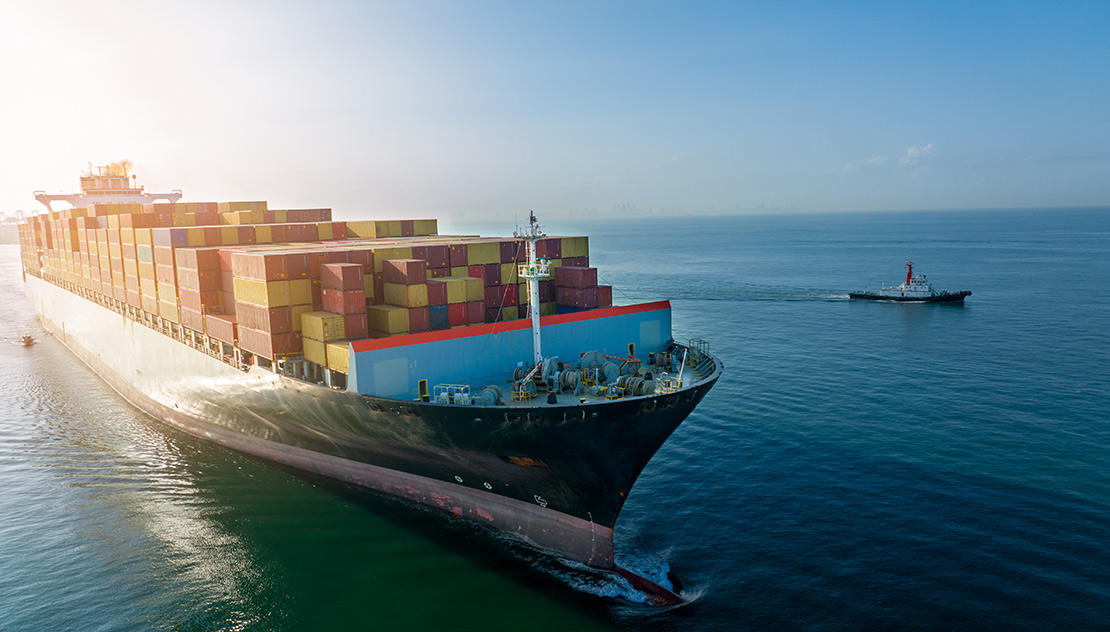
It has been widely reported that Houthi Rebels have declared a ceasefire of sorts in relation to their targeting of commercial shipping in the Red Sea region. So, what does that mean for ocean freight?
Firstly, the ceasing of attacks on cargo ships excludes those owned by Israelis, or vessels carrying the Israeli flag, but also stipulates that in the event of any aggression against the Republic of Yemen by the US, the UK, or Israel, they will resume attacks on US/UK vessels.
The natural assumption is this will result in ships returning to the shorter Suez Canal route as opposed to the current journeys around the Cape Of Good Hope. However, we currently believe that is unlikely in the immediate future for the following reasons:
- It seems likely that carriers would need to build trust in the Houthi’s new claims and not immediately risk vessels, equipment and crew.
- Carriers have no control over any future attacks on Yemen, which could break the ceasefire.
- Carriers have too many vessels deployed for the shorter route. During the past year, they have been chartering and introducing new vessels to cover the additional rotational requirements of the longer transits. An immediate change could lead to heavy overcapacity.
- Overcapacity, as outlined above, would likely lead to a fall in ocean freight rates.
- There remains uncertainty over Trump’s proposed tariff increases, which could have an even greater impact on global ocean freight volumes and potentially lead to further overcapacity.
- Major carriers are currently in the process of maneuvering vessels to align with the new alliances and schedules. To readjust schedules so soon would be extremely challenging.
Of course, it is possible that some lines could decide to return quickly, if one carrier jumps then that could encourage others. We will of course be monitoring developments very closely during the coming weeks.
If you have any questions regarding the above, then Westbound are here to help. So, please do not hesitate to contact us.
Become a Westbound VIP
From simpler bookings, communication, and collaboration to reporting, insights, and more, our intuitive cloud platform puts everything in one place. So you get control, efficiency, and transparency, and a launchpad for your supply chain.
Contact Us
Related Posts